





Microgrid Feasibility Templates


Every successful microgrid project starts with one essential question: Does this system make sense—technically, financially, and operationally?

A feasibility analysis is the first critical step in answering that question. Before designs are finalized, funding is secured, or equipment is specified, project stakeholders must understand whether a proposed microgrid is viable, resilient, and worth pursuing.

Microgrid feasibility templates provide a structured way to evaluate options early—supporting decisions such as:

  • Whether to proceed, pause, or pivot a project

  • Which technologies and system sizes are appropriate

  • How much investment is required and what returns are realistic

  • Whether the project aligns with resilience, sustainability, or grant objectives

In short, feasibility analysis transforms ideas into informed, defensible plans.

Site Screening Template

Assess location viability 

DOWNLOAD HERE

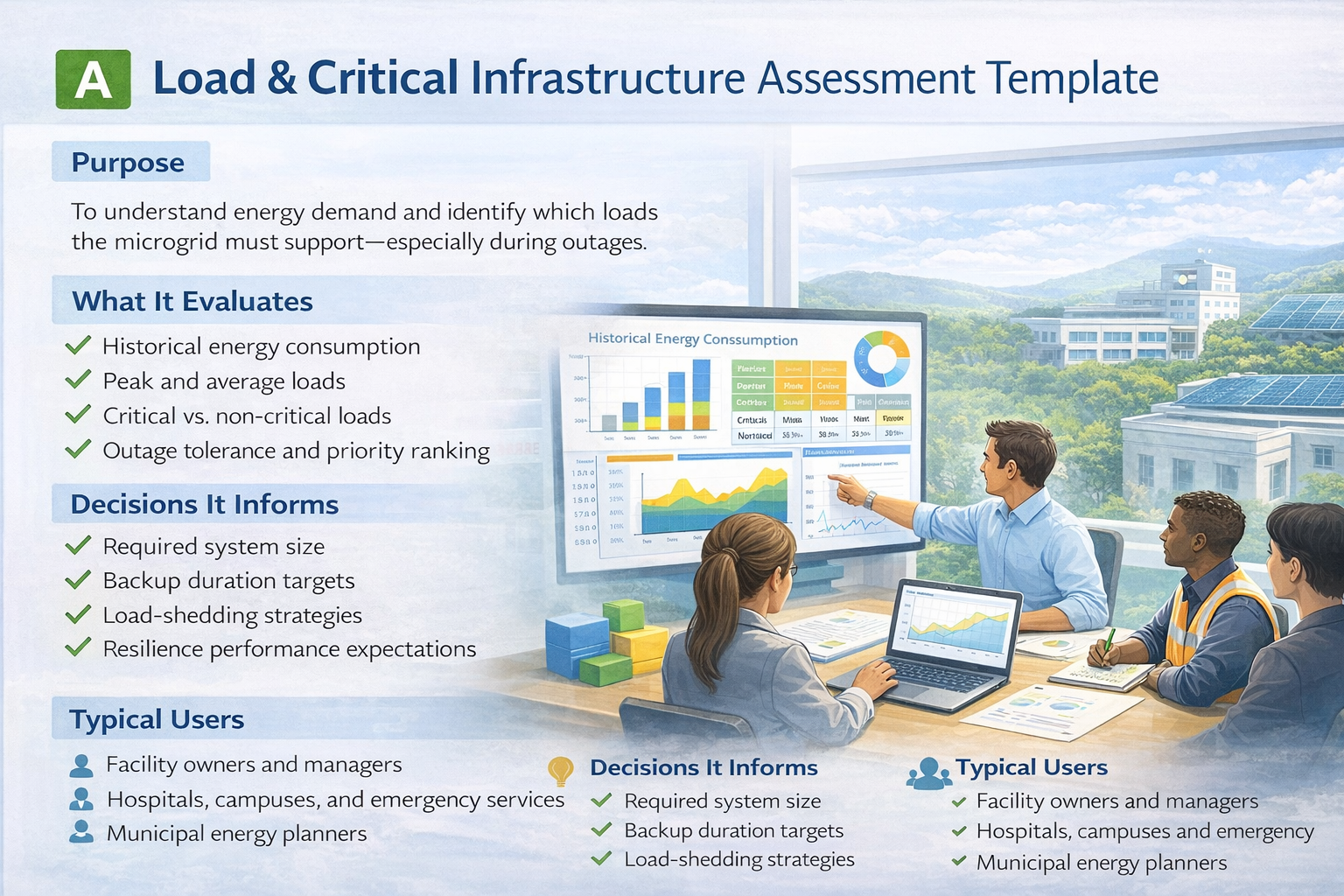
Load & Energy Profile Template

Analyse loads & demand

DOWNLOAD HERE

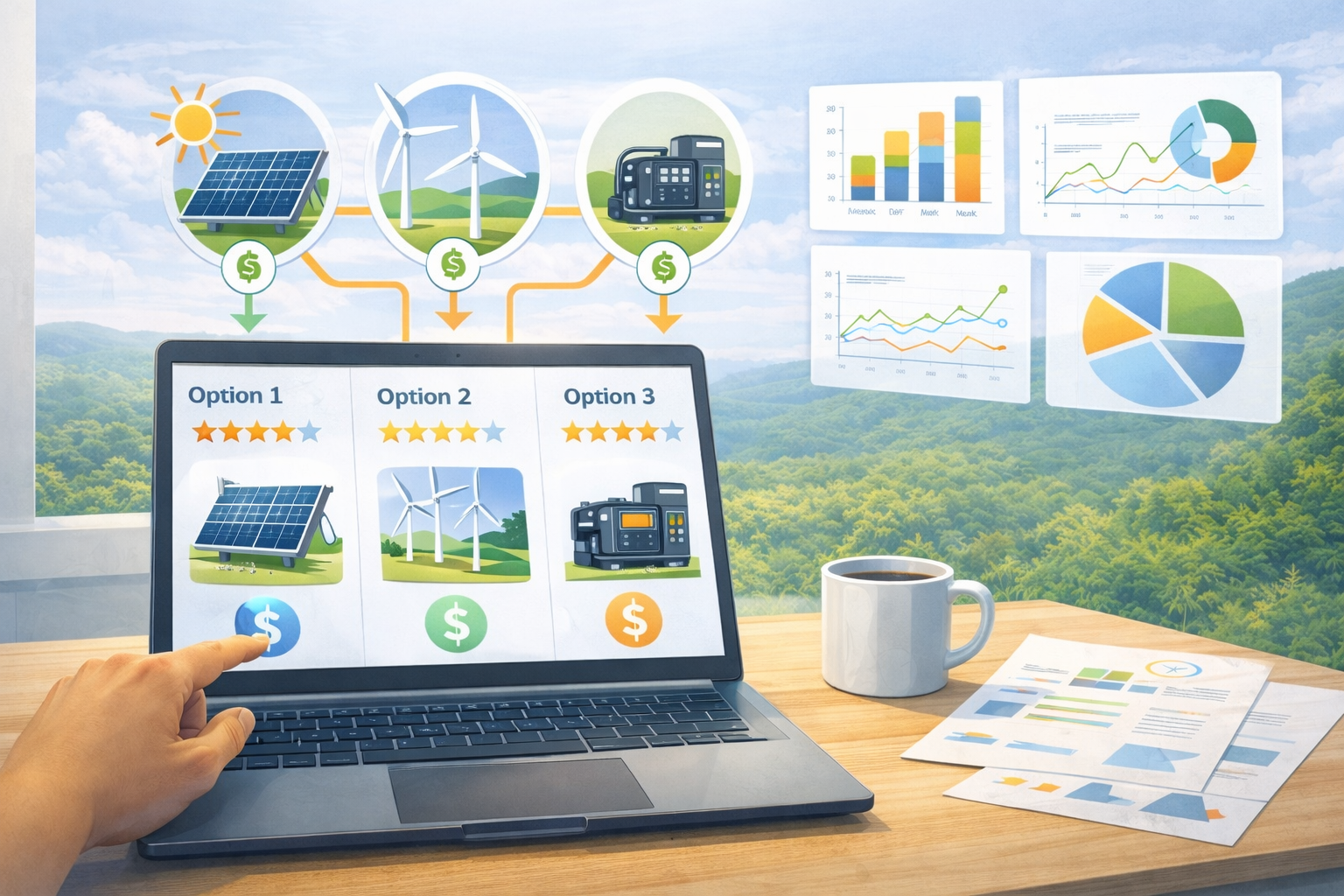
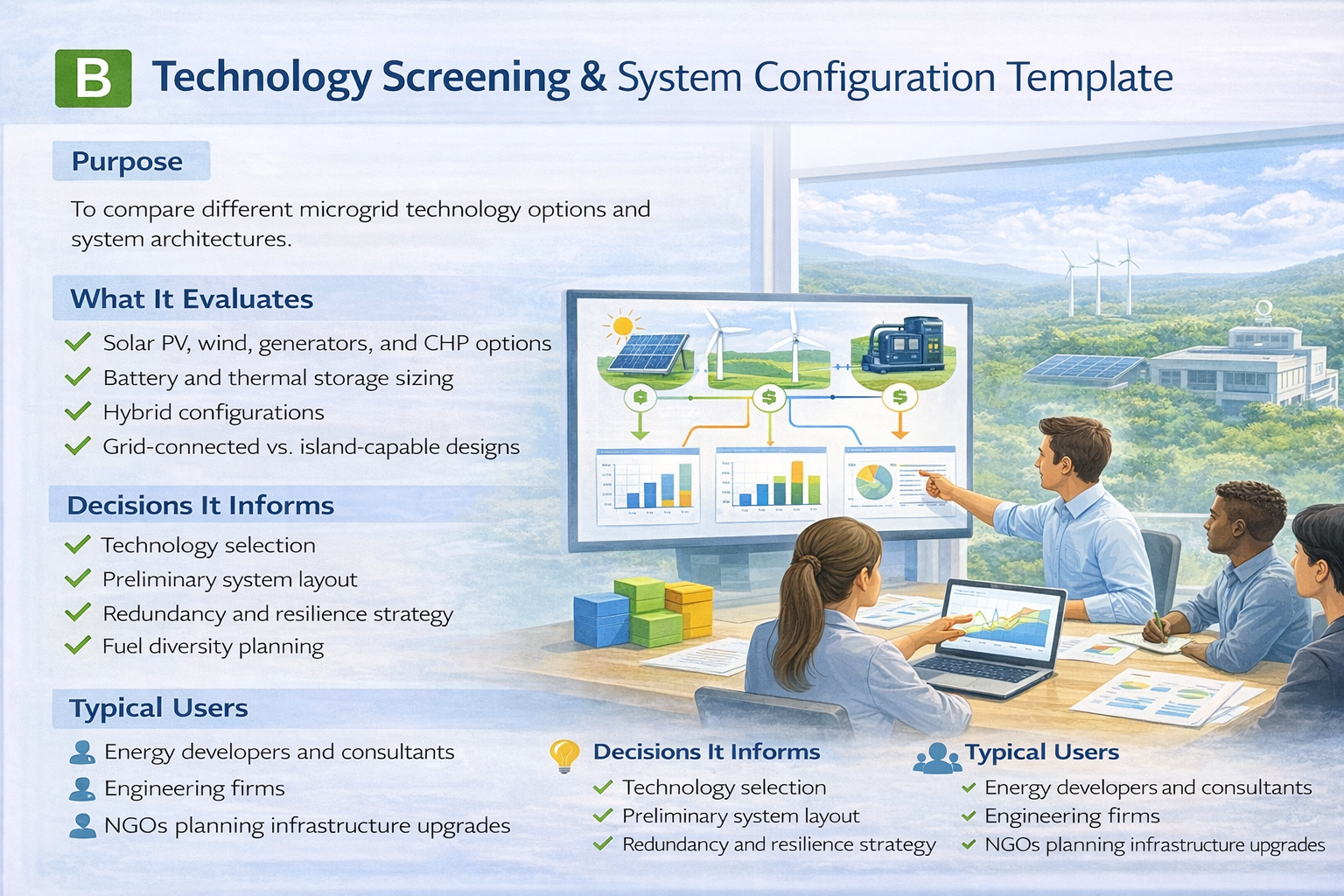
Technology Fit Template

Evaluate system options

DOWNLOAD HERE

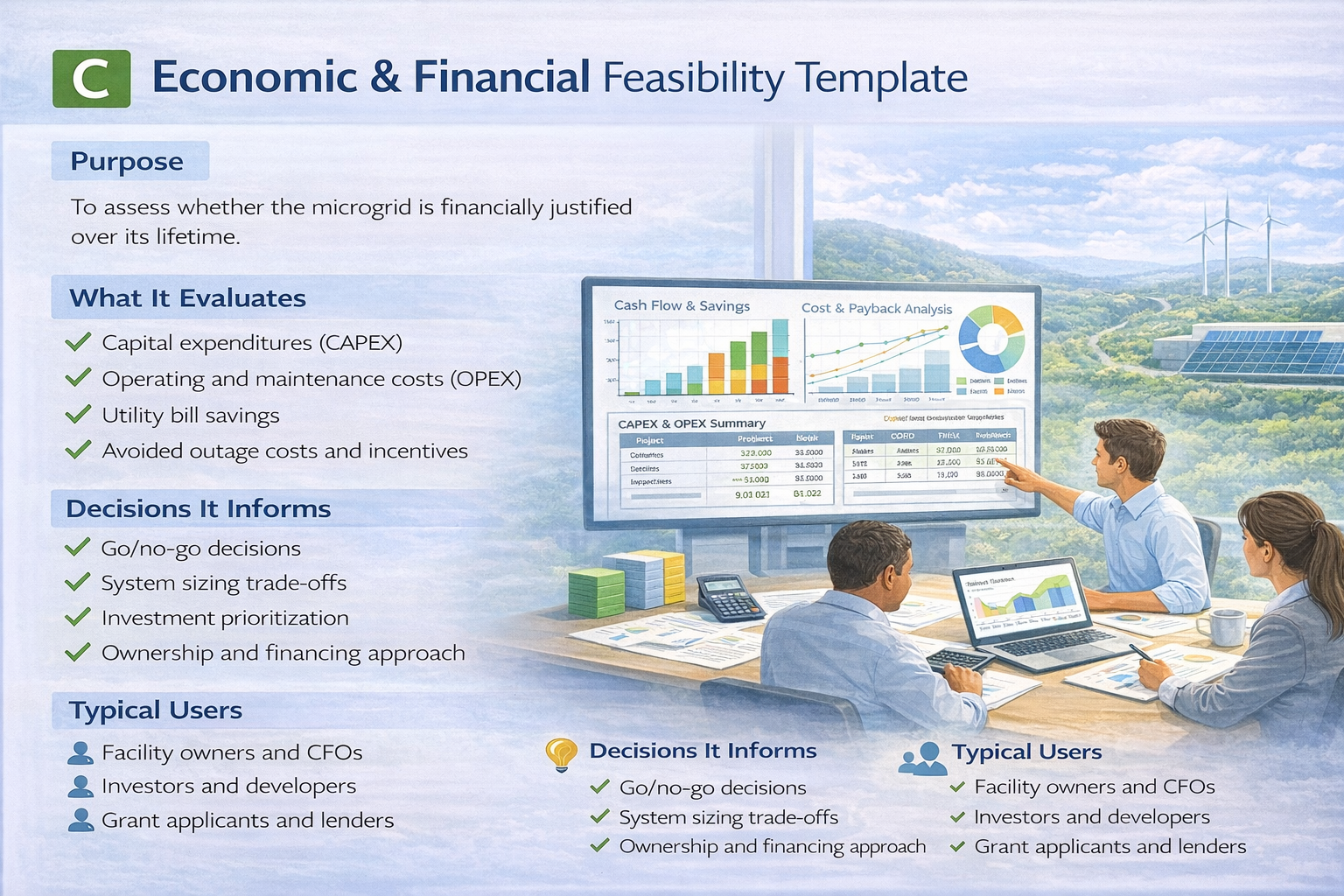
CAPEX & OPEX Estimation Template

Estimates cost and expenses

DOWNLOAD HERE

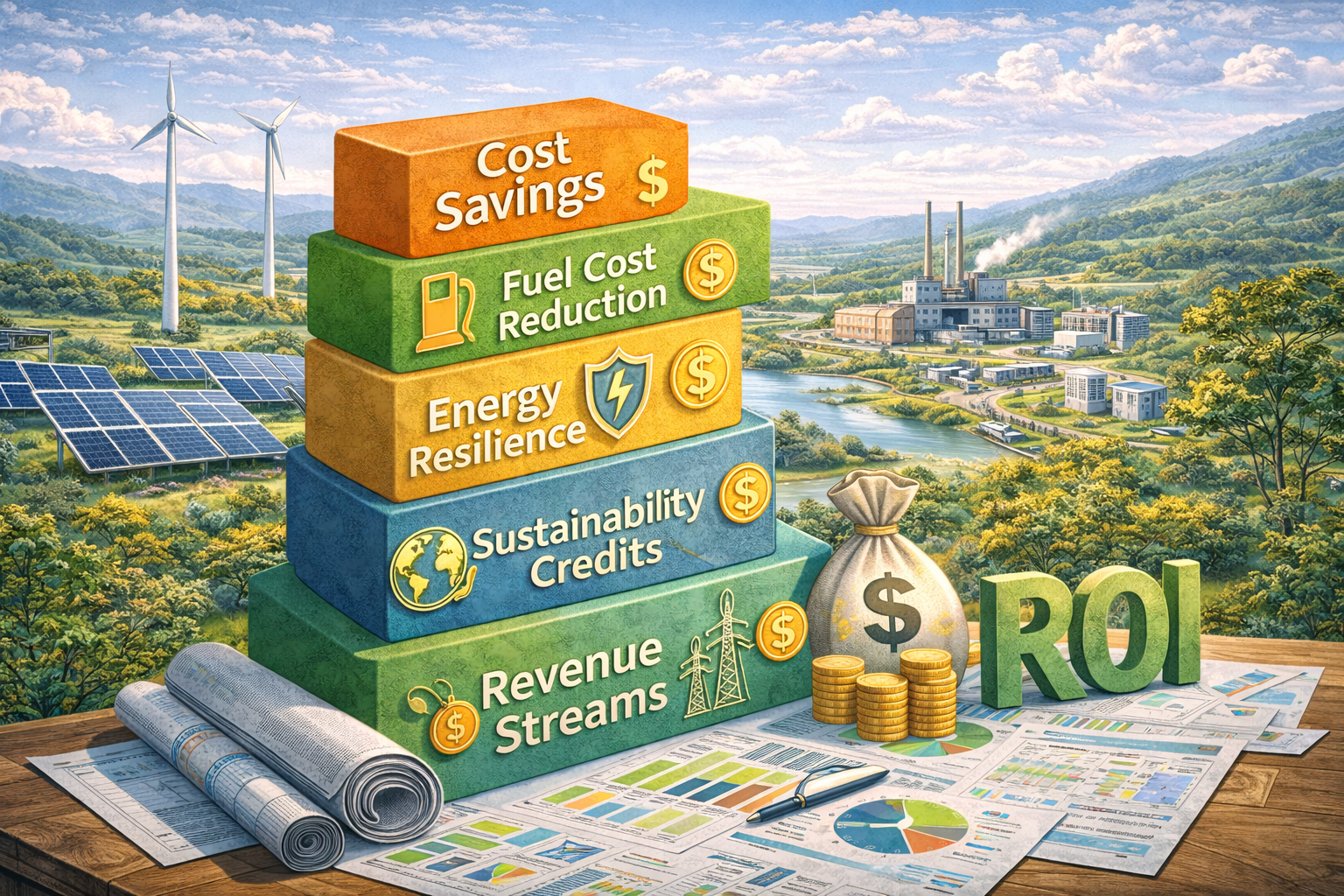
Value Stack & Benefits Template

Quantify savings & ROI 

DOWNLOAD HERE

Grant & Funding Readiness Template

Prepare for funding support

DOWNLOAD HERE

 What Is a Microgrid Feasibility Study?

A microgrid feasibility study is an early-stage assessment that evaluates whether a proposed microgrid can be built, operated, and justified based on real-world constraints and goals.

It typically examines four core dimensions:

Technical Feasibility

Can the microgrid physically work at this site?
-Load profiles and critical loads
-Available generation resources (solar, wind, generators)
-Energy storage requirements
-Grid interconnection and islanding capability

Economic Feasibility

Does the microgrid make financial sense?

-Capital and operating cost
-Utility rate impacts
-Fuel savings and avoided outage costs
-Return on investment (ROI), payback period, and lifecycle costs

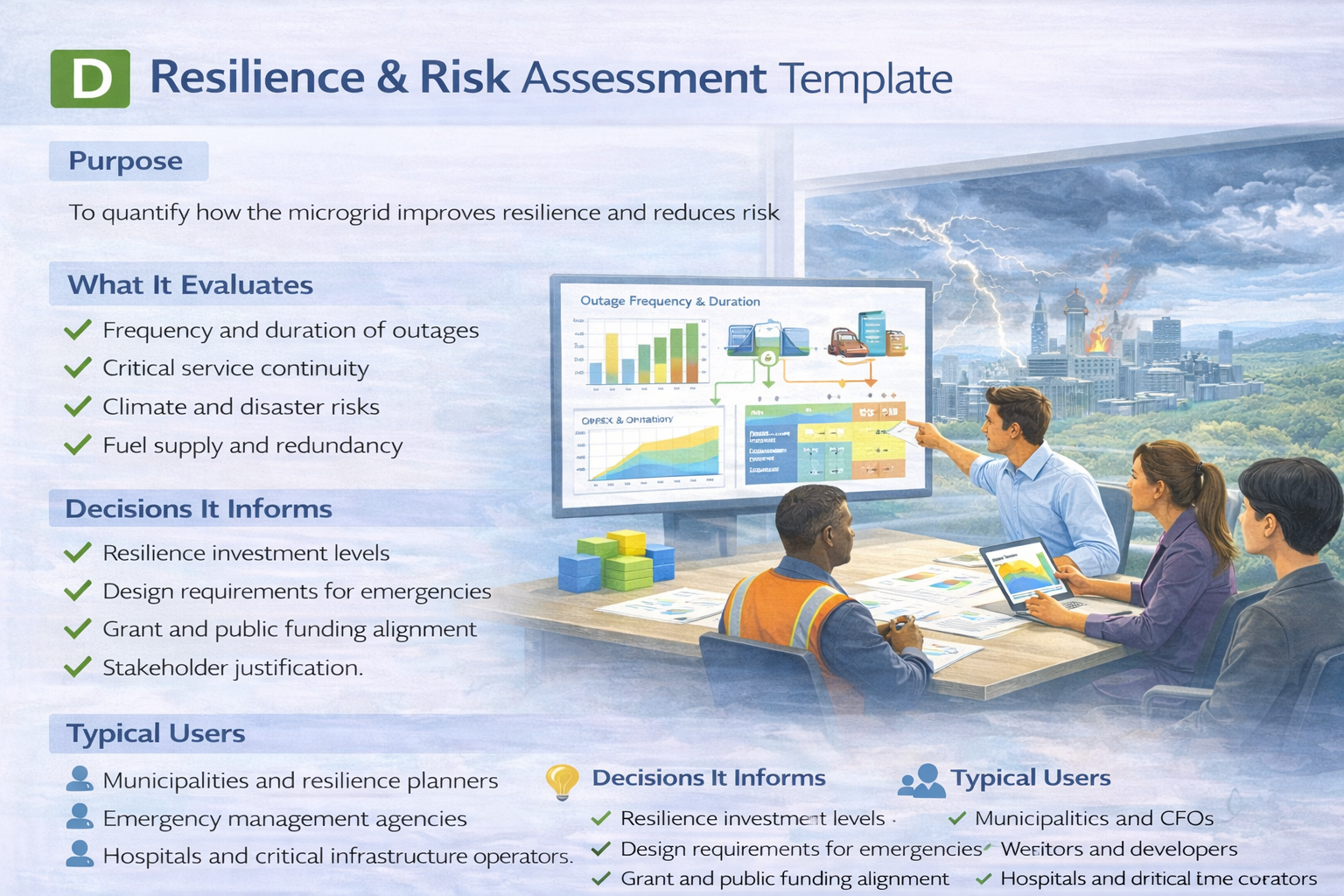
Operational Feasibility

Can the system be operated reliably over time?

-Maintenance requirements
-Staffing and controls complexity
-Fuel logistics and redundancy
-Performance during grid outages or emergencies

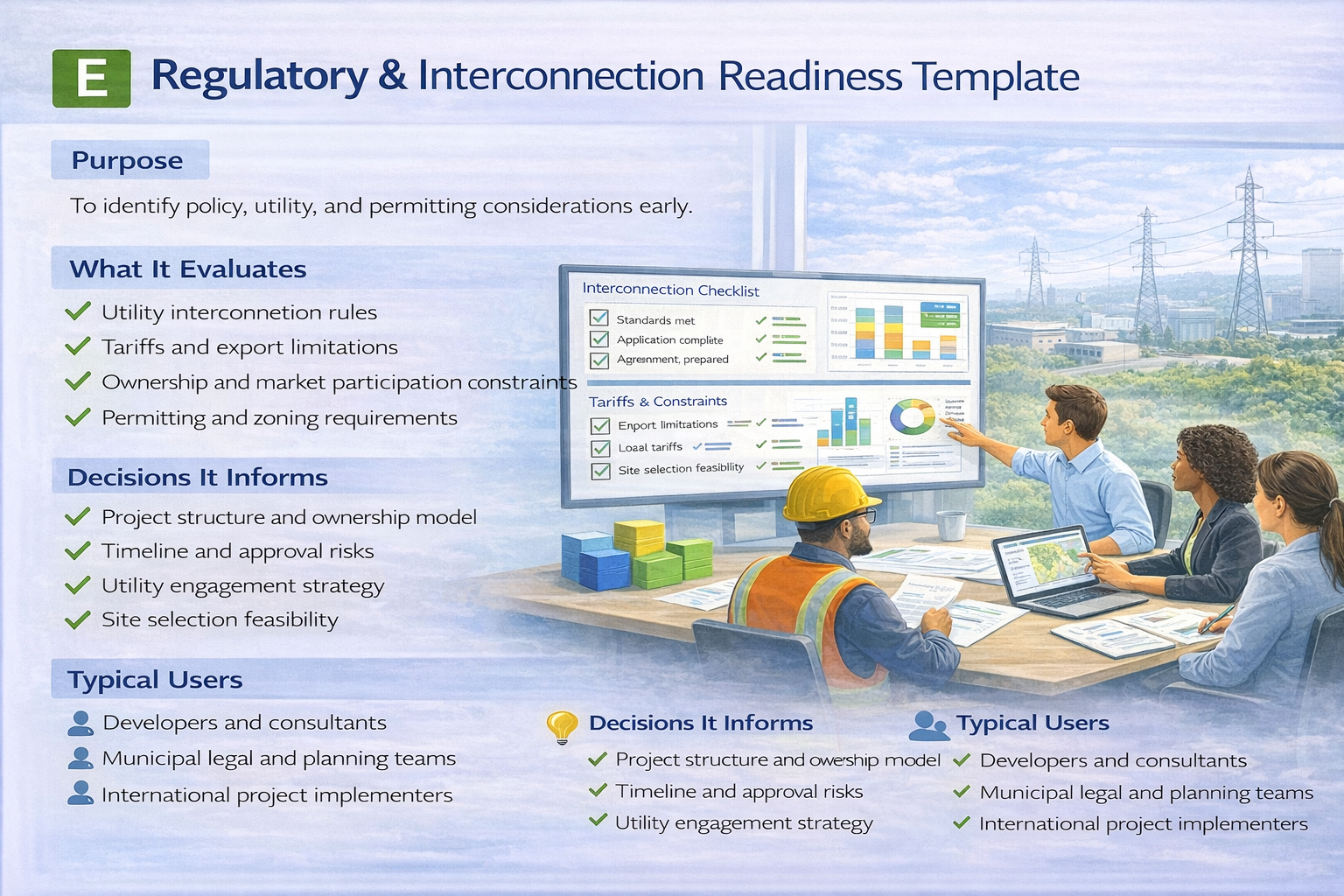
Regulatory & Institutional Feasibility

 Is the project allowed and supportable?

 -Utility rules and tariffs
-Interconnection standards
-Ownership and governance models
-Permitting, zoning, and policy constraints

What Are Feasibility Templates?

Microgrid feasibility templates are standardized planning tools used during pre-feasibility and early feasibility phases of a project.

Rather than starting from a blank page, templates guide users through the most important questions, assumptions, and calculations needed to assess viability.

Well-designed templates:

  • Reduce risk by ensuring critical factors aren’t overlooked

  • Save time by structuring data collection and analysis

  • Improve decision quality with consistent, comparable outputs

  • Strengthen funding readiness by aligning with lender and grant expectations

They are not replacements for detailed engineering studies—but they are powerful tools for determining whether a project is worth advancing and how it should be shaped.

Types of Microgrid Feasibility Templates

Below are the most common and valuable microgrid feasibility templates used globally.

How These Templates Are Used 

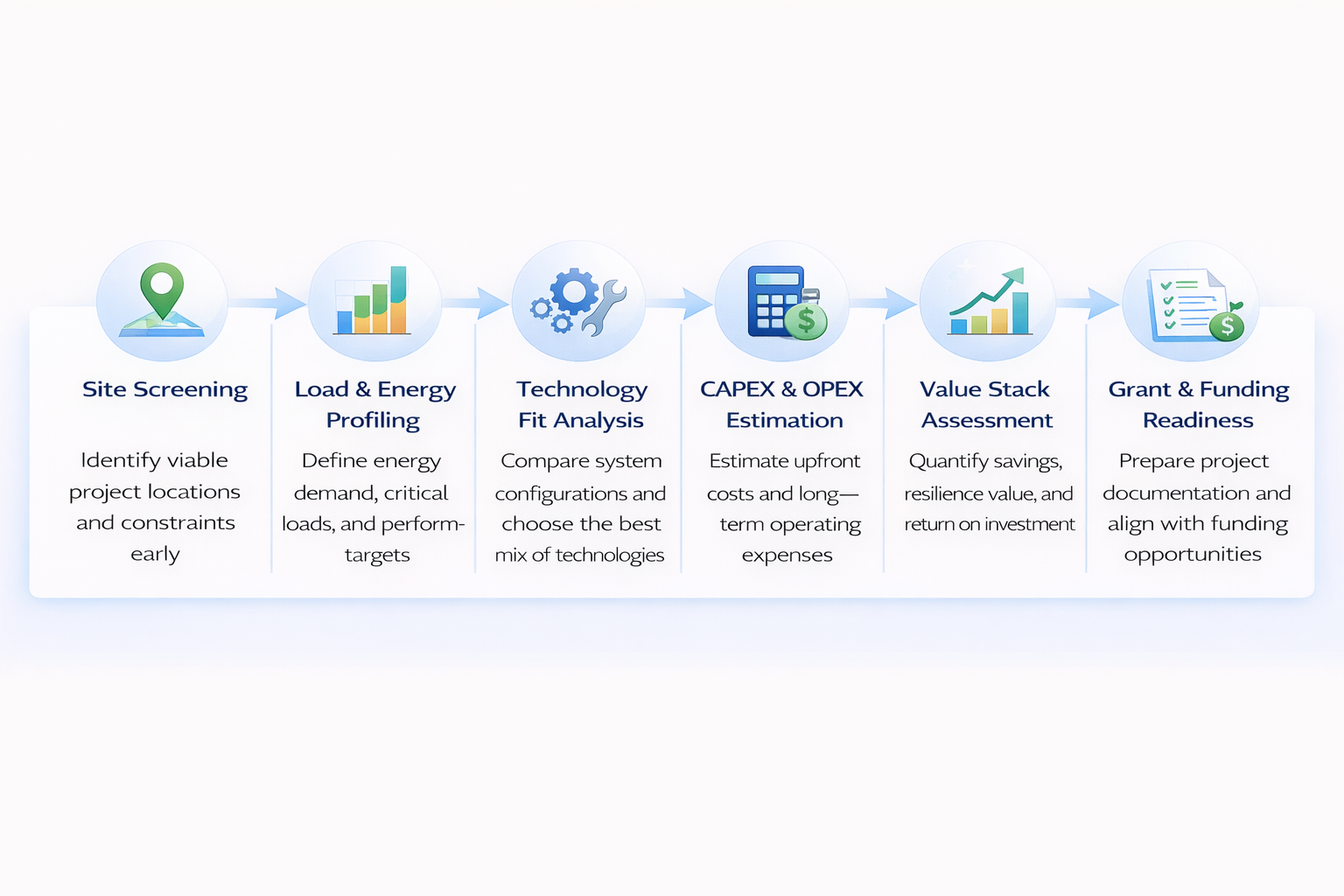
Feasibility templates are used in a step-by-step workflow to evaluate a microgrid early—starting with site screening and load analysis, then comparing technology options, estimating costs, calculating benefits, and preparing for funding.

Together, they help determine if a project is ready to move into detailed design, modeling, interconnection studies, and full financial analysis.

 

Who Should Use These Templates?

These feasibility templates are designed for a wide range of early-stage microgrid stakeholders, including:

 They are particularly valuable where resources are limited and early decisions carry long-term consequences.

These microgrid feasibility templates are intended to support early-stage planning and decision-making only.

They do not replace:

  • Detailed engineering design

  • Utility interconnection studies

  • Investment-grade financial models

  • Legal, regulatory, or permitting analysis

Final project decisions should always be supported by qualified engineers, financial professionals, and local authorities.

Feasibility templates bring structure, clarity, and discipline to early microgrid planning. They help stakeholders ask the right questions early—when answers matter most.

As part of the Microgrid Knowledge Hub, these tools are designed to support informed decisions, credible proposals, and mic